Safety first
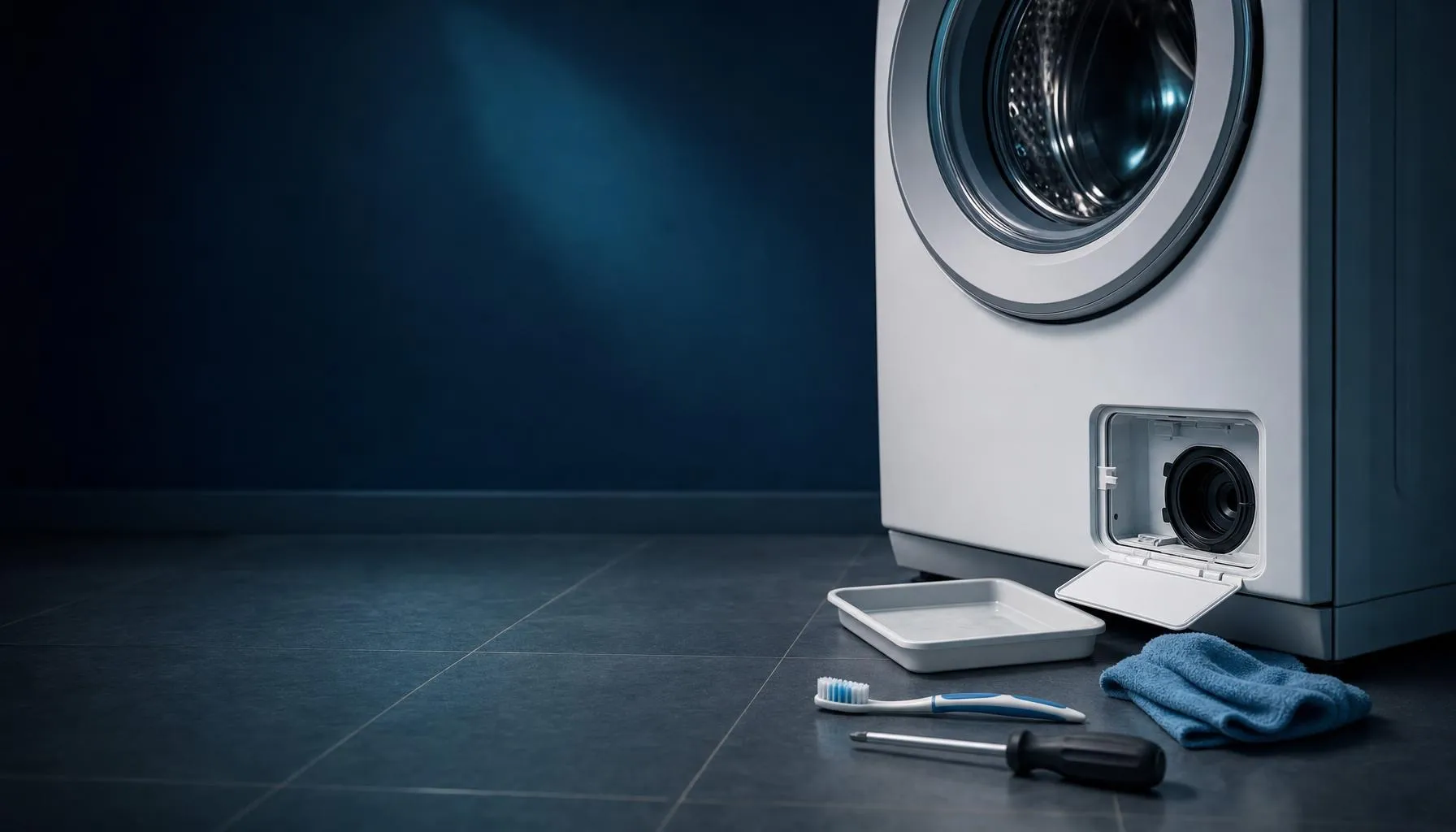
Always switch off and unplug the machine and turn off the water supply before you open the filter, move the machine or check hoses. Have towels and a shallow tray ready: water will come out of the filter. If you smell burning, see sparks, or the fault involves wiring, the motor or the drum bearings, stop and call a qualified engineer or the manufacturer.
Quick fault finder
| Problem | Most likely cause | What to check first |
|---|---|---|
| Will not drain | Blocked pump filter or drain hose | Clean the filter; straighten the drain hose; clear the sink trap or standpipe |
| Will not spin | Unbalanced load | Redistribute or add items; check a no-spin option is not selected |
| Leaking at the front | Door seal or detergent drawer | Clean and inspect the seal; check the drawer is not clogged |
| Leaking underneath | Loose filter cap or hose | Tighten the filter cap; check inlet and drain hose connections |
| Bad smell | Residue and mould | Clean seal, drawer and filter; run a hot maintenance wash |
| Loud banging on spin | Uneven feet or overloading | Level the machine; do not overfill; check transit bolts were removed on new machines |
| Will not start | Door lock, power or settings | Close the door firmly; check child lock and delay start; check the plug and fuse |
| Error code shown | Fault detected by the machine | Look up the exact code in your manual or the maker’s website |
Washing machine not draining
- Unplug the machine and put a tray and towels in front of the filter hatch (usually bottom front).
- Open the hatch, release any small emergency drain hose and let the water out slowly.
- Unscrew the filter and remove fluff, coins, hair grips and other debris. Rinse it and screw it back firmly.
- Check the drain hose behind the machine is not kinked or squashed.
- If the hose goes into a sink trap, clear the trap; if it goes into a standpipe, check that is not blocked.
If the pump hums but water still does not drain, the pump may need replacing. That is a job for an engineer.
Smells and mould
Low-temperature washes and too much fabric conditioner leave residue that grows mould. Wipe the rubber door seal (pull back the folds), wash the detergent drawer in warm water, clean the filter, then run an empty hot maintenance wash (60C or the machine’s drum-clean programme). Leave the door and drawer ajar after each wash to let them dry.
Noise and vibration
Make sure the machine is level (adjust the feet and lock them), is not touching cabinets or walls, and is not overloaded. On a new machine, check the transit bolts were removed: leaving them in causes violent shaking and damage.
A five-minute monthly care routine
- Weekly: wipe the door seal and glass; leave the door open to dry.
- Monthly: clean the detergent drawer and pump filter.
- Monthly: run an empty hot maintenance wash.
- Every few months: check the hoses for cracks or bulges.
- Always: use the right amount of detergent. Overdosing leaves residue; auto-dosing machines help.
Repair or replace?
Compare the repair quote with the price of a new machine and the age of yours. Check whether you are still under the manufacturer’s warranty: some brands offer 5 or 10 years on registered machines. If you decide to replace, start with our best washing machines, check budget options, and read energy labels explained to see what a newer model could save.